
Bowel Cancer Research at the Jack Birch Unit
This Bowel Cancer Awareness Month, we spoke with Professor Will Brackenbury, Director of the Jack Birch Unit at the University of York, to find out all about the ground-breaking research the JBU is undergoing surrounding colorectal cancer. Will shared some fascinating details on their upcoming project and the impacts it could have on future treatment.
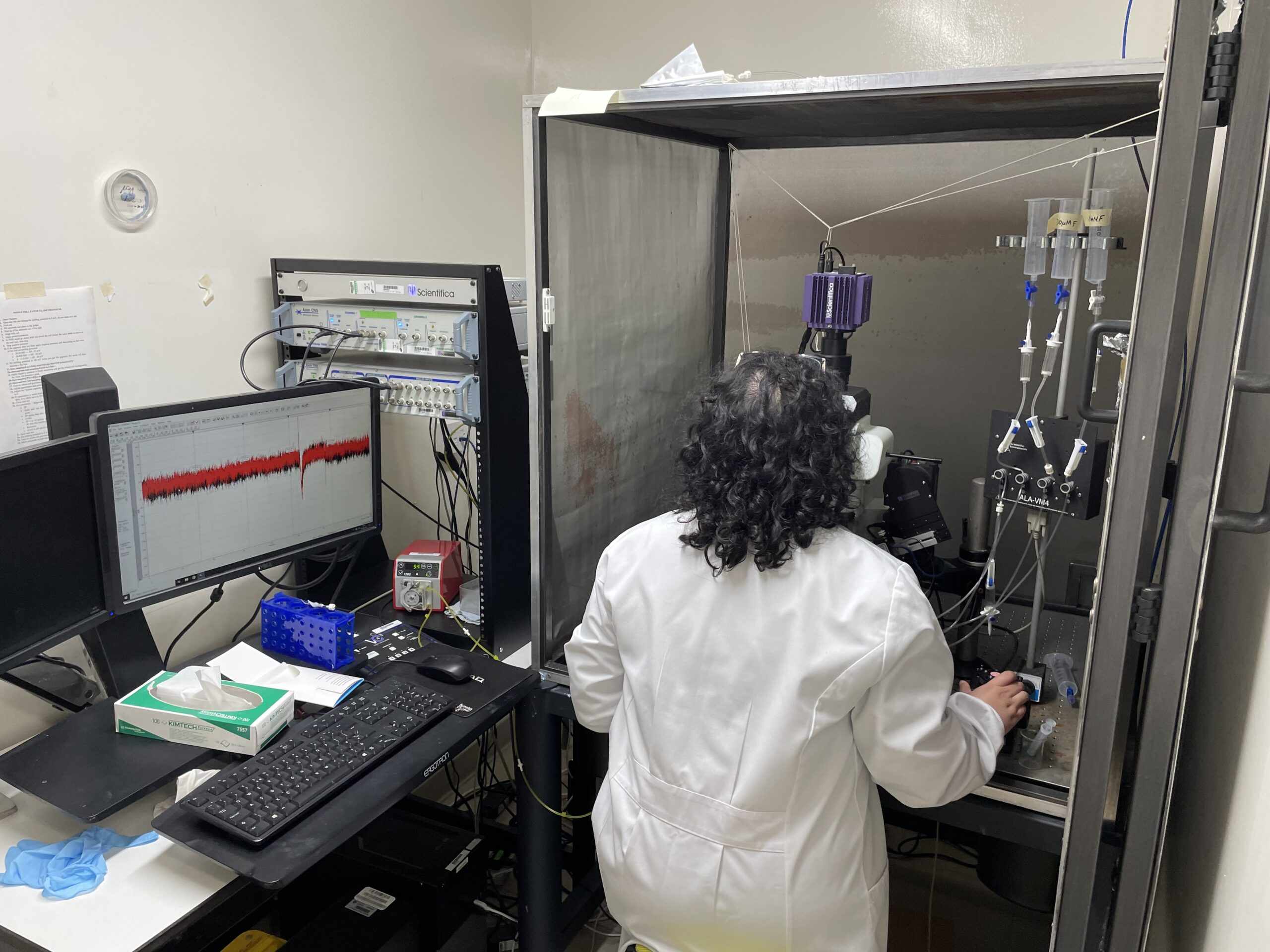
(Image description: JBU researcher using electrophysiology equipment)
Tell us all about the project – what is it and who are you working with?
It is a collaboration between the JBU and colorectal surgeons at York hospital (Mr Dibyendu Bandyopadhyay and Mr Michael Lim) in which we are studying sodium transport as a novel biomarker of aggression in bowel cancer. We have already developed a pipeline to collect fresh tissue from the hospital and bring it to the lab for research purposes. A new clinical fellow will join the team in May to continue the research.
How are you going about it (methods, equipment)?
We are using a combination of methods: electrophysiology (to measure the activity of sodium channels in live cancer cells from the patients’ tumours), microscopy (to study expression of the sodium channels on the cancer cells), and mass spectrometry (to measure the sodium level in tumours compared to nearby normal colon tissue).
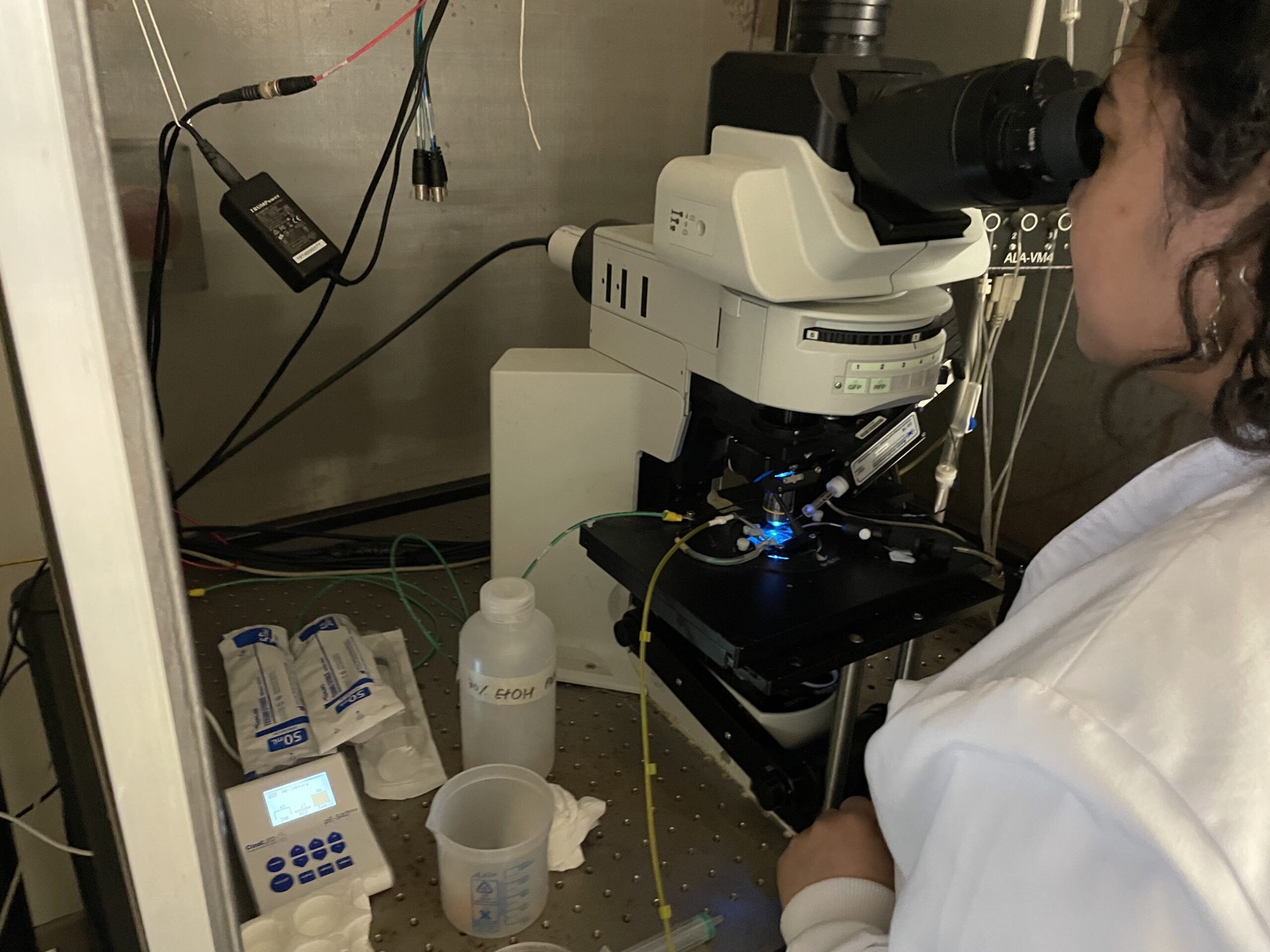
(Image description: Electrophysiology equipment)
What does the electrophysiology equipment do?
This allows us to use an electrode to study the activity of sodium channels by measuring tiny currents (picoamps, one million millionth of an amp) across the surface of individual live cancer cells. Using this approach, we can see if sodium channels are more active in colon cancer cells than healthy colon cells (as we have already found in breast cancer).
What is the impact this project will have on cancer patients?
If we do find high sodium levels and sodium channel activity in the colon cancer samples from patients in this project, it would provide evidence for us to then further investigate whether targeting these channels with existing drugs (e.g. antiepileptic drugs) might have beneficial effects. For example, in breast cancer, we have found that such drugs can reduce the ability of cancer cells to escape the primary tumour and spread to form metastases.
We can’t wait to see where this project will go and the positive effect it could have on the field of bowel cancer treatment. Read more about the JBU and their research here.